
Optimize Website for AI Search and Build Lasting Visibility
Asanka • Nov 7, 2026
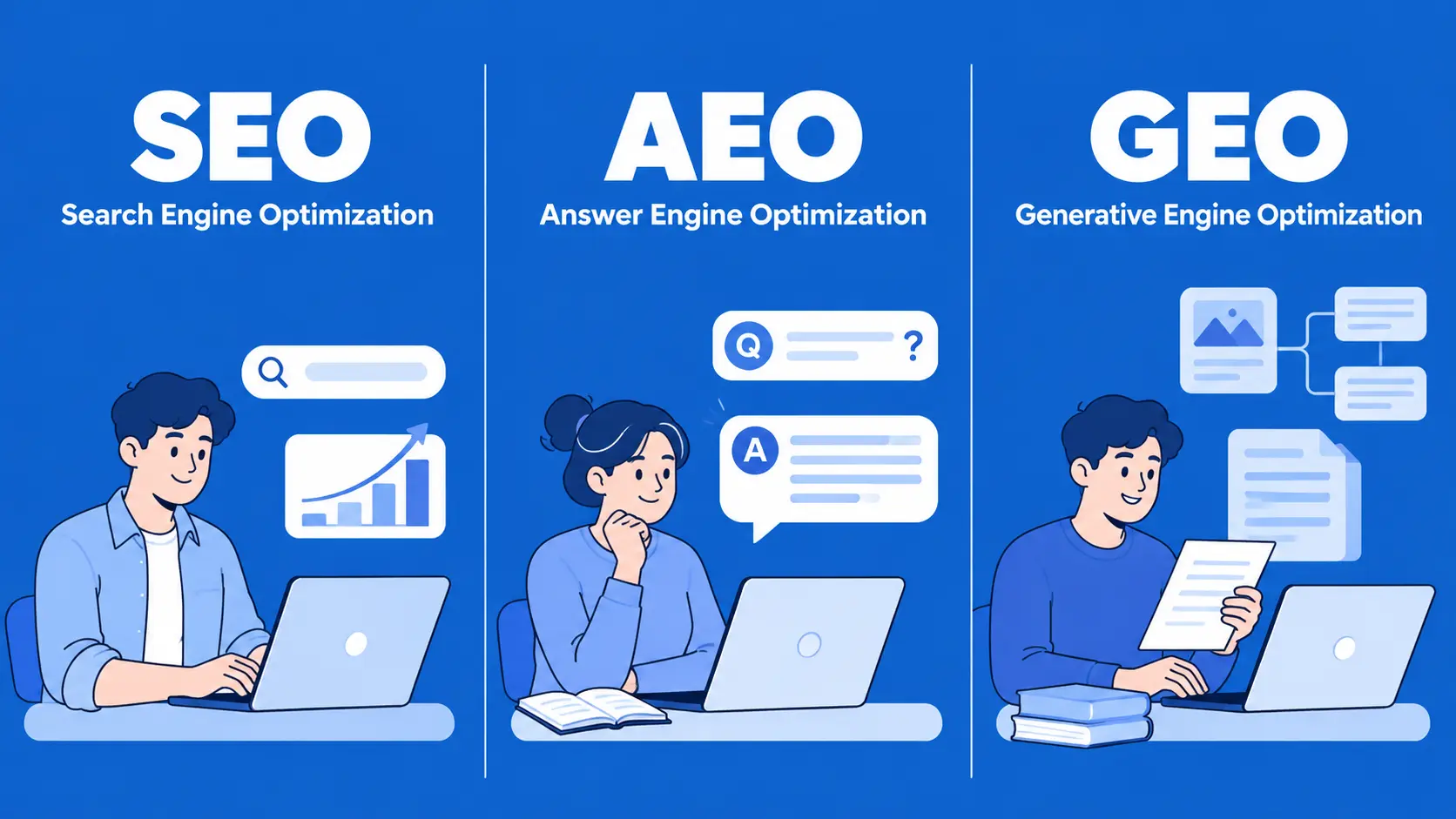
differences between seo, aeo, and geo
Why AI Search Is Changing Website Visibility
To optimize a website for AI search, businesses need to make their information easy to crawl, understand, verify, and reference. Search experiences such as Google AI Overviews, Google AI Mode, and Microsoft Copilot increasingly help users find answers without browsing multiple websites. This means your website needs more than keyword rankings. It needs clear information, reliable content, and a strong digital presence that helps AI systems understand what your business offers and why it matters.
Think about someone planning a holiday in Bali. Instead of searching for a generic spa, they might ask which Seminyak spa offers a unique four-hand massage experience. If your website clearly explains the service, location, benefits, and expertise behind it, you have a better opportunity to become a relevant source.
How AI Search Finds and Understands Websites
AI search combines search engine retrieval capabilities with language models to provide contextual answers. Rather than simply matching individual keywords, these systems can interpret the meaning behind a question and retrieve information from multiple relevant sources. Google’s AI search experiences may also use query fan-out, expanding a user’s question into related searches to gather broader information.
However, appearing in an AI-generated answer does not happen automatically. Search engines must first access and index eligible pages before those pages can potentially become sources. Clear content, technical accessibility, topical relevance, and credible information all contribute to making a website easier to understand and reference.
Key Factors That Improve AI Search Visibility
There are several important elements behind AI search visibility. Technical SEO ensures that search engines can access your website, while structured content helps them understand the relationship between your services, location, and expertise. Consistent business information, customer reviews, expert knowledge, and relevant third-party mentions also strengthen your digital credibility.
Another important factor is content usefulness. Instead of repeating keywords, create pages that directly answer customer questions with specific and verifiable information. Structured data can provide additional context about your business, but it must accurately represent the information visitors can actually see on your website.
A Practical AI Search Optimization Procedure
Improving AI search visibility does not always require complicated tools or advanced technical knowledge. Asanka recommends approaching website optimization through a structured process that combines technical SEO, content improvements, and digital reputation management. Here is a practical procedure that business owners and marketing teams can start applying.
Step 1. Identify what your customers are searching for.
Start by listing at least five questions potential customers might ask before choosing your business. Include questions about your services, location, pricing, expertise, and what makes your business different. Use these questions to identify which information should be available on your website.
Step 2. Check whether search engines can access your website.
Review your robots.txt file, XML sitemap, and Google Search Console indexing reports. Make sure important pages are not accidentally blocked by robots directives, noindex tags, or incorrect canonical URLs. Check your website on mobile devices and resolve broken links that prevent search engines from navigating between important pages.
Step 3. Organize your website content clearly.
Give every important page a specific purpose, with descriptive page titles, relevant H1 headings, and logical H2 and H3 sections. Place the most important answer near the beginning of each page before explaining supporting details. Make sure visitors and search engines can easily understand your services, business location, and areas of expertise.
Step 4. Strengthen your business information and credibility.
Keep your business name, address, phone number, operating hours, and service descriptions consistent across your website and business profiles. Include authentic customer testimonials, professional credentials, project examples, and relevant industry recognition. These details help establish a more complete and verifiable picture of your business.
Step 5. Implement relevant structured data.
Use appropriate Schema.org markup, such as Organization, LocalBusiness, Service, or Article, depending on the actual content of each page. Validate your implementation using Google’s Rich Results Test and Schema Markup Validator. Remember that structured data should describe visible, accurate information rather than introduce unsupported claims.
Step 6. Publish helpful supporting content.
Create articles that answer related customer questions and connect them to relevant service pages through contextual internal links. For example, a spa business could publish articles about massage techniques, wellness experiences, and choosing treatments in Seminyak. This helps build topical relevance instead of relying on one promotional landing page.
Step 7. Submit, monitor, and improve.
Submit your updated XML sitemap through Google Search Console and inspect important URLs to check their indexing status. Consider using IndexNow to notify participating search engines when important content changes. Monitor organic search performance, indexing reports, and available AI visibility reports, then update pages based on what customers actually search for.
Following these steps creates a more accessible, informative, and trustworthy website. Although no procedure can guarantee immediate indexing or AI citations, consistently applying these practices gives search engines better information to work with.
How Jari Menari Builds Local Brand Visibility
A good example of strong local positioning is Jari Menari, a spa in Seminyak, Bali, established in 2001. Its identity is built around professionally trained male therapists, rhythmic massage techniques, and a distinctive approach to relaxation. Rather than presenting itself as just another massage provider, the business communicates specific experiences that customers can recognize and remember.
One of its signature treatments is the Absolutely Amazing Four Hand Massage, where two therapists coordinate their movements to deliver a synchronized massage experience. Jari Menari also communicates its commitment to therapist development, with its website describing 200 hours of initial training and 75 hours of refresher training annually. These details give potential customers a clearer understanding of the expertise behind the service.
Its digital presence reinforces this positioning through dedicated treatment information, business details, customer testimonials, and industry recognition. Its Tripadvisor listing also provides an independent source of customer feedback, with a 4.6 out of 5 rating from 869 reviews at the time of writing.
What makes this example relevant to AI search optimization is the consistency of its information. When a business repeatedly communicates its location, signature service, expertise, and customer experience across its website and credible external platforms, it becomes easier for search systems to associate that business with relevant local searches.
The lesson is simple. Businesses should not only tell search engines what they sell, but also provide enough meaningful information to explain why customers choose them.
Make Your Website Ready for AI Search
AI search visibility is built through a combination of technical accessibility, useful content, and a credible online reputation. You do not need to change everything at once. Start by fixing indexing barriers, improving important service pages, and making your business information more consistent across the web.
If you want to assess your website’s current readiness or need guidance implementing these optimization steps, Asanka can help you identify practical improvements based on your business goals. Visit the Asanka Contact Page to discuss your website optimization needs or continue the conversation through WhatsApp.